Lapland culture and history in Rovaniemi
Rovaniemi is the capital of Finnish Lapland, but it is not Sámi land. Its own story is one of reindeer herding, a town burned in 1944 and rebuilt to Alvar Aalto’s plan. This page sorts out what belongs where.
Rovaniemi markets itself as the Official Hometown of Santa Claus, and that is the first thing many visitors meet. The culture underneath is older and plainer. The town sits where the Ounasjoki joins the Kemijoki, in the middle of Finland’s reindeer herding area, and its centre was almost entirely rebuilt after the Second World War. Sámi culture is part of Lapland, but its homeland lies further north. Knowing the difference helps you choose what to see and how to behave when you go looking for it.
Burned in 1944, rebuilt by Aalto
In October 1944, during the Lapland War, the civilian population of Rovaniemi was evacuated. The retreating German army burned the town almost to the ground, and the town and the land around it were left full of landmines. Visit Rovaniemi puts the damage at about 90 per cent of the buildings in the town centre.
The rebuilding was led by Alvar Aalto, who headed the reconstruction office of the Finnish Association of Architects. In 1945 his office drew the reindeer antler plan: from the air, the main roads out of town form the antlers, the centre between the two rivers forms the head, and the sports field Keskuskenttä is the eye. The plan was not carried out in full, though the figure is still recognisable. Aalto’s civic centre with the library, Lappia Hall and the City Hall came later and is described on our sights page.
A few buildings remind you of the town before and just after the war. The red-brick post bus depot from 1933 survived and is now the Korundi House of Culture. The old town hall of the Rovaniemi market town has been turned into a hotel. On Pohjolankatu, the LAURI log houses were brought in from the Lappish countryside after the war and now hold a craft workshop where items of reindeer antler, wood and leather are made. For the full picture, go to the Arktikum: the “Northern Ways” exhibition shows scale models of Rovaniemi before and after the Lapland War.
The cabin built for Eleanor Roosevelt
Tourism at the Arctic Circle started with the reconstruction. In the summer of 1950 Eleanor Roosevelt came to Rovaniemi to see the rebuilding for herself and asked to cross the Arctic Circle. The local architect Ferdinand Salokangas designed a cabin for the visit overnight, and Visit Rovaniemi gives 11 June 1950 as the day it was completed. It stood just over 100 metres south of where the circle was measured then. The Roosevelt Cottage was the first attempt to get passing travellers to stop at the Arctic Circle for coffee, souvenirs and a postcard with the Arctic Circle postmark. It was the first building at the Arctic Circle, on the site of today’s Santa Claus Village.
Reindeer herding around Rovaniemi
Reindeer herding in Finland is tied to a reindeer husbandry area set out in law. It covers 122,936 square kilometres, 36 per cent of the country, and is divided into 54 herding cooperatives. Rovaniemi lies inside it: the Palojärvi cooperative spans Rovaniemi, Pello, Ylitornio and Tervola, and Rovaniemi is its largest town. At the end of the 2024–2025 herding year there were 179,509 live reindeer in Finland, against a permitted maximum of 203,700, and 4,197 reindeer owners. Just over a quarter of them were under 25.
The reindeer you see are not wild. They are semi-domesticated, every animal has an owner, and each owner has a registered earmark. The herds graze freely regardless of who owns the land. In Finland only citizens of the European Economic Area who live in the herding area, the cooperatives and the herders’ association may own reindeer. It is better not to ask a herder how many animals they own: the association says the number is private and never said out loud.
The Sámi began herding reindeer and moving with their herds through the seasons, and Finnish settlers took up herding early and adapted it to their own needs. According to the herders’ association, herding came to Finland via Enontekiö and Muonio. Around Rovaniemi, the herders you meet are mostly Finnish, and the association notes that most people offering reindeer farm visits to tourists are working herders. If you drive, expect reindeer on the road at any time; the risk of collisions is highest from November to January.
Farm visits and sleigh rides near Rovaniemi are compared on rovaniemi-reindeer.com.
In late winter herders also race. The Poro Cup series has been held since 1932 according to Visit Finland, with drivers on skis behind the reindeer. In 2025 the Rovaniemi leg took place on 22–23 February at the Mäntyvaara race track. Dates for 2027 had not been published in October 2026.

Where Sámi culture is at home
The Sámi are the only Indigenous people in the European Union, and their status is written into the Finnish Constitution. Their land, Sápmi, covers the north of Finland, Sweden, Norway and Russia. In Finland, the Sámi Parliament defines the Sámi Homeland as the municipalities of Enontekiö, Inari and Utsjoki in full plus the northern part of Sodankylä around Vuotso. Rovaniemi is not part of it.
Sámi self-government in Finland is based in Inari. The Sámi Parliament, with 21 members and 4 deputies elected every four years, has its seat there, and the Sajos building on the Juutua River, where it flows into Lake Inari, is the centre of Sámi self-government in Finland. Sajos is an Inari Sámi word for a place where you love to arrive and stay for a while.
For visitors the key address is Siida, the Sámi Museum in Inari and the national museum for Sámi culture. Its main building by Juhani Pallasmaa opened in April 1998, and the main exhibition links Sámi culture with northern nature. Outside, an open-air museum has a trail of about 800 metres, shaped like a reindeer herder’s lasso, past around 50 buildings and structures; in winter it opens when the weather allows. From 16 October 2026 to 3 April 2027 Siida shows “We Who Remain”, contemporary Sámi art in cooperation with Kiasma. From 5 October 2026 to 31 May 2027 the museum is open Monday to Saturday 10:00–17:00 and closed on Sundays.
Inari is 340 kilometres from Rovaniemi. There are daily coaches, and the ride takes about five hours, so treat it as a trip of at least one night rather than a day trip. In Rovaniemi itself, Sámi culture appears mainly in the Arktikum and in occasional events: in Advent 2024, for example, Rovaniemi Church held Christmas concerts in Sámi. 6 February is Sámi National Day, a recommended flag day in Finland.
What the Sámi Parliament asks of visitors
In September 2018 the Sámi Parliament in Finland adopted guidelines for ethically sustainable Sámi tourism. Their aim is to end tourism that exploits Sámi culture and to stop false information spread through it. The guidelines are written mainly for tour companies outside the Sámi community, but several points matter to you when you choose a tour in Rovaniemi:
- The right to wear the Sámi dress is tied to Sámi origin, and imitation costumes worn in tourism count as cultural appropriation.
- The “Lapland baptism” is an invented ceremony with no basis in Sámi culture.
- Linking the Sámi or Sámi culture with fairy-tale figures such as Santa Claus is named as a form of appropriation.
- Non-Sámi guides posing as Sámi or as shamans, and the touristic use of the Sámi drum, are rejected.
- People in Sámi dress who do not work in tourism must not be photographed without their consent.
- A reindeer herd must not be approached without the owner’s permission, also not on skis, a snowmobile or a dog sled.
In practice this means that a Santa programme with costumed “Sámi” hosts, or a baptism certificate at the Arctic Circle, is not Sámi culture. The Sámi Parliament’s visitor guidance sums up the attitude it hopes for: in Sámi Homeland, a tourist is a guest in a cultural landscape shaped by Sámi life.
History walks, museums and a reindeer farm
Ways to see the history and the herding culture of Rovaniemi itself, all bookable from town.
In town · Arctic Lapland Tours
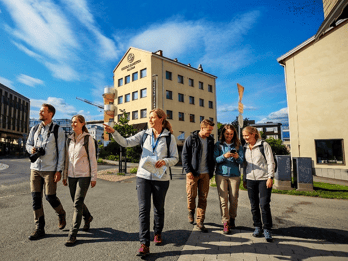
Guided walk through the city centre
A 1.5-hour walk through the centre on the destruction in the Second World War, the rebuilding and Alvar Aalto’s work.
- Duration 1.5 hours
- Meeting point Maakuntakatu 33, Rovaniemi
- ✓ Free cancellation
Culture · Arktikum
Arktikum science centre and museum
Entry to the Arktikum, where the “Northern Ways” exhibition shows models of Rovaniemi before and after 1944 and covers reindeer herding.
- Duration Valid on the selected day
- Meeting point Arktikum, Pohjoisranta 4, Rovaniemi
- ✓ Free cancellation
Culture · Arktikum
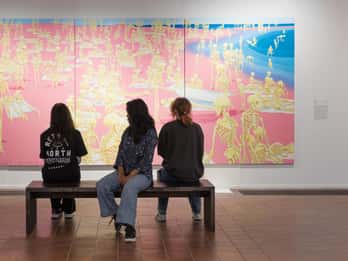
Culture pass for Arktikum and Korundi
Seven days to see both the Arktikum and Korundi, the red-brick depot from 1933 that survived the war.
- Duration Valid for 7 days from collection
- Meeting point Arktikum, Pohjoisranta 4 (pass also available at Korundi)
- ✓ Free cancellation
Reindeer · Arctic Circle Snowmobile Park
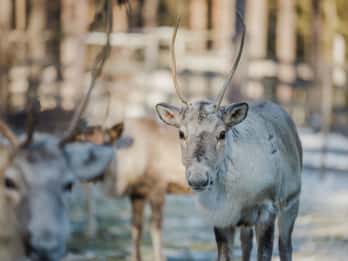
Reindeer farm visit with a 500 m ride
A visit to a working reindeer farm with a 500 m sleigh ride, a short way to meet the animals behind Lapland’s oldest livelihood.
- Duration 2.5 hours
- ✓ Free cancellation
Prices and ratings in these cards come from the booking platform when the page loads. They include taxes and booking fees; child rates, where a tour has them, are on the product page.
Questions travellers ask
Is Rovaniemi in Sámi land?
No. The Sámi Parliament defines the Sámi Homeland in Finland as the municipalities of Enontekiö, Inari and Utsjoki and the northern part of Sodankylä around Vuotso. Rovaniemi is not on that list. Sápmi as a whole stretches across the north of Finland, Sweden, Norway and Russia.
Where can I learn about Sámi culture?
At Siida, the Sámi Museum in Inari, which is the national museum for Sámi culture. Inari is 340 km from Rovaniemi and the bus takes about five hours, so plan at least one night. In Rovaniemi, the Arktikum’s “Northern Ways” exhibition includes a section on the Sámi.
Are the reindeer around Rovaniemi wild?
No. Reindeer in Finland are semi-domesticated. Every animal has an owner and carries the owner’s earmark, even though the herds graze freely in the forest.
Is a “Lapland baptism” a Sámi tradition?
No. The Sámi Parliament describes the so-called Lapland baptism as a ceremony invented purely for tourists, with no basis in Sámi culture, and lists it among the most offensive examples of cultural appropriation.
Why does Rovaniemi look so modern?
In October 1944 the retreating German army burned the town, and about 90 per cent of the buildings in the centre were destroyed. The town was rebuilt after the war, largely along a plan from Alvar Aalto’s office.
Where these facts come from
Dates, opening hours and rules change. We checked these pages in October 2026; the official source has the final word.
- Sámediggi: Ethical guidelines for Sámi tourism
- Sámediggi: Principles for Responsible and Ethically Sustainable Sámi Tourism (PDF)
- Sámediggi: Responsible Sámi tourism
- Sámediggi: Responsible visitor’s guidance
- Sajos
- Siida: Sámi Museum
- Siida: About us
- Siida: Open-Air Museum
- Siida: Arriving at Siida
- Visit Inari: Distances
- Reindeer Herders’ Association: Reindeer herding
- Reindeer Herders’ Association: Palojärvi cooperative
- Reindeer Herders’ Association: Cooperatives
- Reindeer Herders’ Association: Statistics 2024–2025 (PDF, Finnish)
- Reindeer Herders’ Association: Reindeer
- Reindeer Herders’ Association: History
- Reindeer Herders’ Association: Profession
- Reindeer Herders’ Association: Reindeer 2020 (PDF)
- Reindeer Herders’ Association: Reindeer tourism
- Reindeer Herders’ Association: Reindeer on the roads
- Arktikum: Northern Ways
- Visit Rovaniemi: Alvar Aalto Architecture in Rovaniemi
- Visit Rovaniemi: Arctic Capital Architecture
- Alvar Aalto Foundation: Reindeer antler city plan
- Santa Claus Village: Roosevelt Cottage
- Visit Rovaniemi: Santa Claus Village at the Arctic Circle
- Visit Rovaniemi: LAURI historical log houses
- Visit Rovaniemi: Events and sights, week 48/2024 (PDF)
- Visit Rovaniemi: Events and sights, week 8/2025 (PDF)
- Visit Finland: Five interesting events in Lapland
- University of Helsinki Almanac Office: Flag days in 2026